ââåyou Can Play at the Water Table or the Art Tableã¢ââ Is an Example of
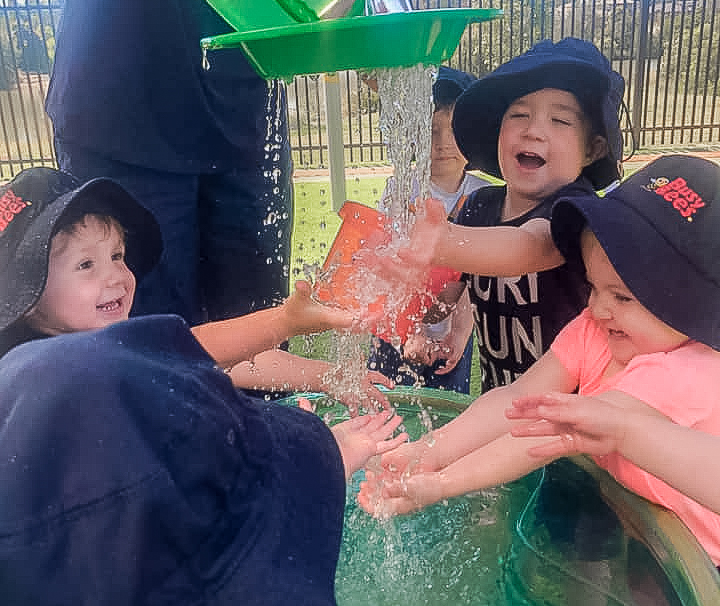
Image: Busy Bees at Heritage Parc
With the atmospheric condition heating up, it's the perfect time to get outside and explore, and there's nothing more fun than spending time splashing and frolicking in the water on a hot day!
Playing with water not just keeps your child feeling cool and having fun, simply y'all may be surprised to larn that water play has then many astonishing benefits for childhood development, making it i of the most popular activities in early babyhood education

Image: Busy Bees at Everton
What is Water Play?
As the name suggests, h2o play is play that involves water besides as using tools such every bit buckets, containers, and toys etc. that let children to splash, scoop, pour, submerge and explore their senses.
Water play in Early Learning settings usually involves a water table or large tub that children can stand around while engaging in their play. This makes for an heady and social experience for children as they splash, play and have fun together.
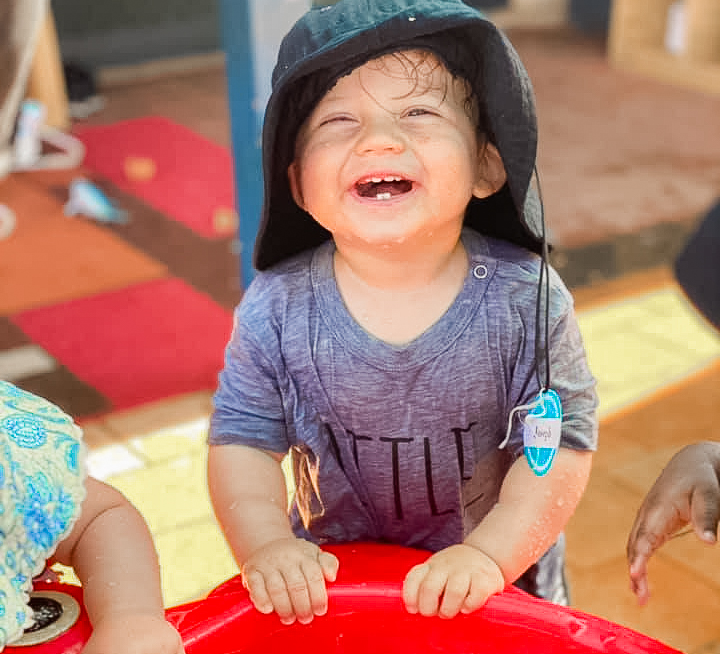
Image: Busy Bees at Kalgoorlie
five Benefits of H2o Play for Your Child's Development
In Early Learning, we acknowledge the environment as a instructor. When children engage with their surroundings and use natural resources in their play, they are building their sense of understanding of the globe and their place in it, while also building their understanding of their ain abilities to affect and influence things. Water play is both fun and educational and has a range of benefits for your child's social and emotional development, every bit well as developing their concrete abilities and early literacy and numeracy skills. As an added bonus, children rarely go bored of it!
one. Water play develops hand-eye coordination
H2o play is a fantastic action for developing children'due south hand-heart coordination as they learn to pour, clasp, stir and fifty-fifty paint with water. For example, through pouring water from ane bucket to another, or learning how to control the management and size of a splash, children are improving their sense of accuracy and command.
two. Water play introduces maths and scientific concepts
Water is the perfect medium for demonstrating mathematical and scientific concepts, such every bit volume and weight. How much h2o do you think could fit in this bucket? Tin we measure it? What do y'all call up will happen if we drop this heavy object into the saucepan?
According to Early Childhood News, equally children dispense water play materials, they build their scientific enquiry and trouble solving skills, as they brainstorm to sympathize why and how things happen. For example, a child may discover that ane object sinks in the h2o and some other object floats, which prompts them to add together more objects to the water to run into what happens. As they continue to investigate which objects sink and float, a kid will soon discover that a heavier object sinks, while lighter objects float, no matter how big or small they are.
Water play can also be used to develop children's literacy and numeracy, such as counting how many buckets of h2o it takes to fill up a tub, or using water and a brush to write and draw.
3. Water play enhances concentration and focus
Have you lot ever found your kid completely immersed in an experience? When children are engaged in h2o play, they tend to lose themselves in the activity and tin spend long periods of fourth dimension exploring and playing. This can encourage children to focus, and whatsoever activeness that holds a child's attention for a long length of time will contribute to increasing their attention span and ability to concentrate later in life.
This is a particular do good for formal learning. Every bit your child prepares to brainstorm school, being able to concentrate in a classroom will become a vital skill.
four. Water play develops motor skills and sensory exploration
Water play activities assistance to develop and strengthen children's gross and fine motor skills. Children enhance their gross motor skills, coordination and physical fettle through lifting, pouring, conveying, running and splashing, while deportment such every bit squeezing assistance to develop the modest muscles in a kid'south easily.
Water play also provides children with and so many opportunities to explore their senses and experience different sensory experiences. Adding materials similar sand, ice, soap or slime to water allows children to put their hands in different textures (gritty, squishy, glace and slimy) likewise as experience different temperatures (warm, absurd, cold.)
5. Water play builds social and advice skills
Water play can be a solitary activity, only children notice it particularly heady to engage in as a group. When water play becomes a group activity, information technology encourages children to engage in social and cooperative play. Information technology's non uncommon to find Kindergarten children, for instance, turn their h2o play into a shared experience with a common goal. For example, children may embark on a mission to fill a big tub with h2o from the water pump, or build a moat in the sandpit, or take turns jumping into the h2o to encounter who tin make the biggest splash. In these play experiences, every child has a role to play and contributes to the ultimate goal.
Through this kind of play, children have the opportunity to see what happens when the sharing of materials and ideas takes identify.
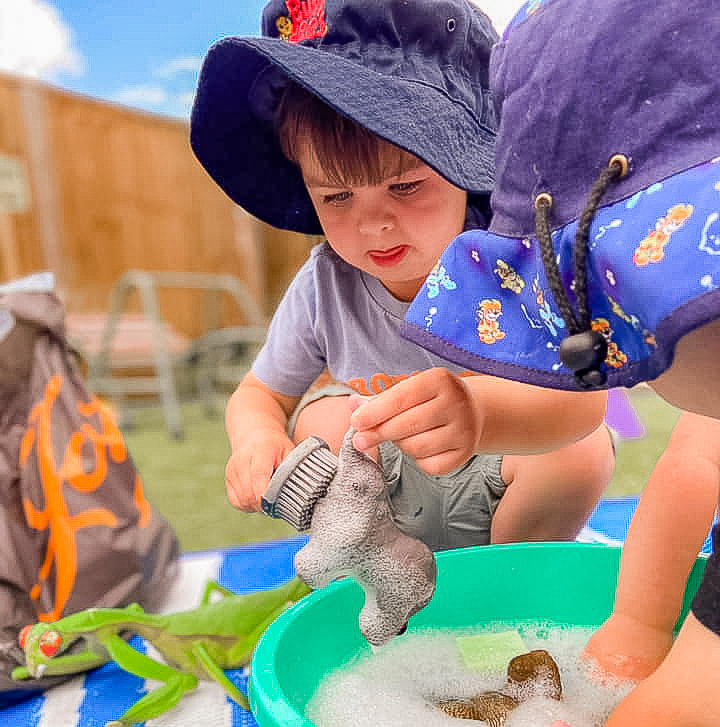
Paradigm: Busy Bees at Burpengary East
Enjoying Water Play at Domicile
If your child attends a Busy Bees Early Learning Service, they are most likely experiencing water play while at intendance, but why not set up a fun water play station at habitation as well?
Setting up water play at home can be an incredibly easy and rewarding experience. There are no rules; all you lot need is water and some form of container, and some tools and utensils.
Some examples of materials you tin contain in water play are:
- Cups and containers of different sizes
- Spades and buckets
- Toys and objects that will sink or float
- Funnels, bottles or eye droppers that tin can be used to transfer water between containers
- Natural materials such as sand, flowers, leaves and pebbles
- Squeeze bottles
- Paint brushes
- Sieves or containers with holes
Download our activity card for a fun water experience for babies and toddlers.
Source: https://www.busybees.edu.au/the-benefits-of-water-play-for-childhood-development-2/
0 Response to "ââåyou Can Play at the Water Table or the Art Tableã¢ââ Is an Example of"
Enviar um comentário