Man Trying to Threaten Family From Jamaica for Winning the Lottery Is Caught in Miami
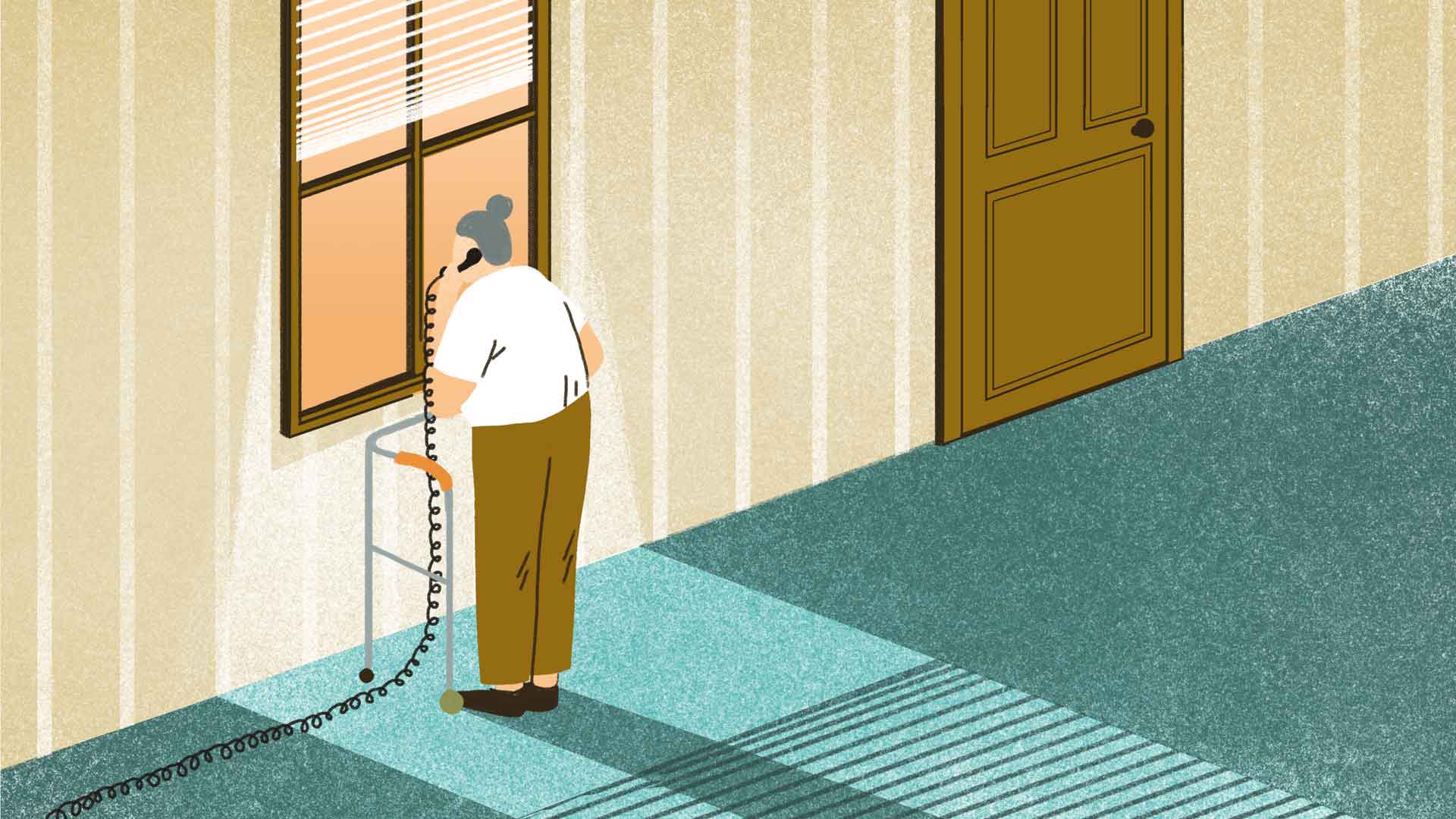
BISMARCK, Northward Dakota — Frank Gasper had a trouble, an Edna Schmeets trouble. For more than a decade, the FBI special amanuensis had disrepair mobsters and white-neckband crooks in New York City, including a real-life character who inspired the moving-picture show "Goodfellas." Only after several strange twists, he'd ended upward in North Dakota, where he was struggling to convince an 82-year-old widow that he really was a federal lawman, not one of the Jamaicans who'd spent months scamming her out of well-nigh $300,000. Schmeets was a housewife who tended cows on the family farm while her belatedly husband worked on the railroad. She lived in a tiny town chosen Harvey near 80 miles s of the Canadian edge. One September mean solar day in 2011, Schmeets got a phone call from a man who introduced himself as Newton Bennett, from the company American Cash Awards. He delivered good news: Schmeets had won a $19 million lottery jackpot and a new Mercedes. Schmeets wasn't buying it — until somebody who claimed to be with the FBI called to assure her the prize was real. The imposter's call drew Gasper into what initially seemed like the unsexiest of cases. Merely it rapidly became his obsession, taking him into the heart of a massive scam that's now as lucrative as the drug trade in Jamaica, and just equally deadly. Merely first he had to convince this fiddling former lady he wasn't trying to rip her off. "One of my biggest problems is getting victims to realize I'm an actual FBI agent, because that'due south part of the scam," Gasper recalled during a contempo visit to his office in Bismarck. "1 of these guys will recall and claim to exist an FBI agent. I tell people, 'Call me back: Here'due south my number, wait me up.' A lot of times they don't accept the internet. They're always afraid." By the fourth dimension the case landed on Gasper's desk, in mid-2012, Schmeets was dead broke, her savings account tuckered. Schmeets was still skeptical subsequently she spoke with the fake FBI amanuensis, merely she wanted to use the coin to help support her children and grandkids. Bennett told her that all she needed to do to claim her winnings was pay the taxes she owed. But afterwards Schmeets wired $iii,500 to comprehend the costs, he called back request for more than money for diverse fees associated with the prize. It kept going like this for months.
Gasper'southward breakthrough was with Schmeets' girl, who reported the scam to local authorities. It was merely the offset of a path on which he'd run across frightened, paranoid, and destitute victims over and over again for the next v years. His case now sprawls beyond multiple states and countries and has so far involved xxx defendants — including a popular Jamaican disc jockey — five federal indictments, and 9 extraditions from Jamaica. Ii extraditions are still pending and 3 fugitives are still on the loose. On July fourteen, Gasper scored his biggest victory yet: Lavrick Willocks, a 28-year-quondam Jamaican accused of bilking at least 90 victims out of $five.7 million, agreed to plead guilty to a conspiracy charge in federal court in Bismarck. Willocks admits that he was Newton Bennett, the man who scammed Schmeets. Viii others who allegedly worked for him currently sit in a Due north Dakota jail awaiting trial on conspiracy, money laundering, and wire fraud charges.
"Nosotros have no national response to this at all. It'due south basically catch 'em if yous can."
But Gasper knows fifty-fifty these convictions won't exist plenty to brand a dent. The Jamaican lottery scam, and others like information technology around the world, show no signs of stopping. Gasper, 56, is i year away from mandatory retirement at the FBI, and the way he sees it, vulnerable senior citizens are being robbed with virtual impunity. State and local cops aren't equipped to handle these complex, multinational investigations. He scrounges resources and works with other federal agencies, just he's the merely FBI amanuensis assigned to the example. He feels like he's waging his own 1-human being war from his windowless office in Bismarck. "We have no national response to this at all," he says. "Information technology'southward basically catch 'em if you lot tin."

Globalization has connected economies across the world, but it has also benefitted criminals that borrow and adapt the techniques used past outsourced industries like telemarketing. The Jamaican lottery scam that ensnared Schmeets is just one example. Indian call eye operators posing equally IRS agents were recently busted for fleecing fifteen,000 Americans out of more than than $300 meg. Altogether, the Federal Trade Commission received more than ane one thousand thousand complaints about simulated debt collectors and imposters terminal year. Jamaicans specialize in the lottery scam. Here'due south how it works: Fraudsters trick victims into paying taxes and fees they say are needed to merits a nonexistent jackpot. The scammers piece of work in teams, using net calling services to mimic familiar U.Southward. area codes, and they may pose as the IRS, the Nevada Gaming Commission, or the Federal Reserve, in improver to the FBI. The targets tend to be retirees over 80 who live alone. It's impossible to say exactly how much money is lost to the lottery scam. Official guesses accept ranged from $120 million a year to as much every bit $ane billion, according to one estimate cited by the Justice Department. That ways information technology could be near half every bit much Jamaica's tourism industry, which is worth about $two billion annually. More than than 141,000 people contacted the FTC last twelvemonth to social club formal complaints about lottery scams. But every bit an estimate for the number of victims, these figures are on the low terminate; scamming frequently goes unreported because people are likewise ashamed or afraid to come forrad. "I've talked to at least 200 victims around the country, probably more," Gasper says. "I've talked to their families. A lot of people went to law enforcement — couldn't get whatsoever assistance. Some of them were laughed at. Some of them simply had people tell them in that location's nothing nosotros tin can do."
"You just need to accept a cell telephone and the listing of names and you lot can outset defrauding people, just like that."
Kevin Watson, an investigator with Jamaica's anti-organized crime agency, said gangs that in one case fought for control of the drug trade now kill each other for access to lead lists, which include names and phone numbers for would-be victims. People who handle scam money are shot for taking more than their allotted cut. Friends and family unit members seek revenge. Money from the scam pays for more than guns and perpetuates the cycle. "Scamming is the biggest thing in Jamaica right now," Watson said. "With drugs, you used to take a selective few who used to control it… It doesn't accept any overhead cost to start a lottery scam. Yous just need to have a cell phone and the list of names and you tin can start defrauding people, simply like that." Gasper's case shows the scam isn't quite that simple. Targets are carefully chosen based on their susceptibility to the scam, and due to their historic period some take mild cerebral harm, a brain status that can atomic number 82 to Alzheimer's or dementia. There'south an entire scamming ecosystem populated by lead list brokers, runners, middlemen, and kingpins — in both Jamaica and the U.s.a..

It'southward unclear exactly how or when the lottery scam emerged in Jamaica. The primeval reports in local media date back to the late '90s, but information technology didn't start booming until the mid-2000s. The timing roughly coincides with the arrival of telemarketing and offshore customer service centers in Montego Bay, where companies trained a portion of the populace in how to skillfully interact on the phone with Americans. "Someone in Jamaica realized, 'Hey, we're working during the day — we can call people and practise our own thing at night,'" Gasper says. "That's one theory of how it started." Another theory — i propagated past CNN — credits Kenrick "Bebe" Stephenson, a prominent gay activist from Montego Bay, as the original "godfather" of Jamaican lottery scammers. Stephenson was associated with the People's National Political party, one of two dominant political groups in a country where politics and gang violence have long been intertwined. Unfortunately, Stephenson isn't effectually to discuss whether he is indeed the godfather: He was gunned down in 2014 and reportedly cached in a gold casket. In Oct 2015, I traveled to Montego Bay on a mission to learn the history of lottery scamming and find out how it became so pervasive. I was fascinated by the connection between the scam and Jamaica's dancehall music scene. Several prominent artists have been linked to scamming, and there are unabridged songs defended to it. The dancehall superstar Vybz Kartel, who is currently serving a life judgement for murder, had a vocal called "Reparation" that includes lines about how the proceeds of scamming are reparations for slavery. He afterwards released another vocal, chosen "Western Union," with a video that shows how "hustle coin" makes its way from the wire transfer office and trickles down through the entire customs. (Full disclosure: Vybz Kartel released an album on VICE Records in 2012.)
With the help of a Montego Bay native, I spoke with multiple people who claimed involvement with the lottery scam. In that location was no consensus on how it began. One musician spoke cryptically about the interest of a gay mafia. Others placed fractional blame on the call centers, though some said those only afterwards added fuel to the burn down. Several claimed information technology was introduced past Nigerian scammers. Nobody could offering anything physical to back up their preferred origin story. Nigh everyone agrees, nevertheless, that the scam is driving a surge in killings. St. James Parish, which is home to Montego Bay, recorded 268 homicides concluding year, more than than anywhere else on the isle. Murders are upward 19 percent nationwide so far in 2017, with an average of 4 slayings per day reported through June. Jamaica has roughly the same population as Chicago — but more than double the homicide rate.
"Many people see this as a legit source of income, in their minds."
While tourism underpins the Jamaican economy, poverty is farthermost. Some desperate people see nothing wrong with taking money from Americans who can seemingly afford to give information technology away. There wasn't fifty-fifty a law that could be used to prosecute lottery scammers in Jamaican courts until 2013, and fifty-fifty now offenders only receive a fine of a few thousand dollars and a curt stint in jail, at almost. "Many Jamaicans didn't come across it equally a problem when it outset started," said Watson, the Jamaican investigator. "It became a cultural thing in pockets of communities in Montego Bay and St. James. Many people see this every bit a legit source of income, in their minds." Exterior a pirate-themed casino in Montego Bay, I met a guy who introduced himself equally "Wayne" — a fake name — and said he was once an "offshore broker" whose job was funneling scam proceeds dorsum to the isle past any means necessary. He looked to be in his early 30s and wore a red Manchester United hat. Asked why he got involved, he answered: "Survival." "You have to do information technology to survive," he said. "What yous gonna consume? How you gonna send your kid to school tomorrow? How your mother gonna swallow? And you have and so many people looking for something and you accept to provide it. You have to find means and ways." Wayne and others pointed out that the proceeds from scamming have helped impoverished communities, funding new housing structure and propping up businesses. But the money also pays for lavish parties, flashy cars, and guns. "You have the proficient and the bad," Wayne explained. "The good part is where you can purchase a house, take care of your family, have a dainty car, get party. That's a adept thing. Simply the bad part is when they start to employ the money for killing." Gasper often refers to scammers equally "scumbags," but Wayne was gregarious with a disarmingly friendly smile. Nosotros ate dejeuner together and he showed me around his onetime neighborhood, even bringing me to a church he hadn't visited in years because I asked to go a sense of the community. As we talked, he showed off scars on his arm and belly from a near-fatal shooting several years prior. He was adamant that — because information technology was likewise dangerous — he'd left banking for scammers backside. A few months after our meeting, I received word from a contact in Montego Bay that Wayne had been killed in a shooting. It's unclear whether his death was linked to scamming. The murder remains unsolved.

Jamaican lottery scammers accept consumed Gasper's professional life. His office in Bismarck is littered with evidence from scam cases — boxes and boxes of documents, piled on the floor and spilling out of cabinets. At that place's more downwards the hall in a locked evidence room, and nevertheless more stored on discs and hard drives. When I visited in April, he sat at his desk in his shirtsleeves, a pistol and spare clip dangling from a leather shoulder holster. "I got so much crap in hither I can't even think about it anymore," he said with a dismissive wave. "I testified that I looked at over a million emails, but it'south probably closer to ii 1000000. Literally, no lie, over a million emails." Gasper was raised in Flushing, Queens, and joined the Marines after higher. He saw combat in Operation Desert Storm, and pictures of artillery guns blazing in Iraq peek out from behind the unruly stacks of lottery scam evidence. He holds a constabulary degree and worked as a prosecutor with the Queens DA'due south role earlier joining the FBI, where he spent iv years on the organized crime squad in New York. His minor claim to fame was arresting the mobster Vinny Asaro, the suspected mastermind of the 1978 Lufthansa heist depicted in "Goodfellas," for using a forged driver'southward license. (Asaro was convicted of a felony forgery charge in 1998 for the driver'southward license, just he was acquitted in 2015 of all charges related to the Lufthansa antic.) Gasper eventually grew bored with the mafia cases and switched to a fiscal crimes unit. "With organized offense, y'all're just dealing with lowlifes," he said. "With white-collar crime, you use your brain a lot more." By 2009, he and his wife were raising a family and wanted to get out of New York City. Gasper had enough seniority at the FBI that he could transfer basically wherever he pleased. His wife'due south proposition took him by surprise: "I remember her saying, 'Yous know, I kind of similar the movie 'Fargo.' Let's check out N Dakota.'" When a spot opened up in Bismarck, Gasper decided to get for it, drawn by the cheap real estate and the chance to offer his kids a different experience from life in the large city. His FBI colleagues in New York were incredulous.
"The guys all made fun of me," he said. "They couldn't believe I was going. They put a sign upwardly in New York with the temperature [in North Dakota]. It was minus 25, minus 30. They'd say, 'Oh, don't worry Frank, it's a dry cold.'" Much of the FBI'south work in North Dakota involves cases on tribal state, and on Gasper's first frigid solar day on the chore he was summoned to the Standing Rock reservation to assistance find a man who had frozen to death in a blizzard. He has since investigated public abuse, sexual activity crimes, and other cases on what he calls "Indian state," in addition to his dogged pursuit of lottery scammers, which he says now takes upwardly well-nigh 80 pct of his fourth dimension. Since at least the early 2000s, Gasper had encountered cases where scam victims were duped into sending coin by wire transfer. Commonly, the losses were too small for a federal investigation or there weren't plenty clues to track down the perpetrators. But when he looked into the case of Edna Schmeets, he saw an opening: She'd sent checks to Florida. "I thought, 'Checks — I tin exercise something with that. That's got to go into a depository financial institution. That's something I tin chase down,'" he recalled. "Information technology's similar a puzzle. If people are stealing coin, for the nearly part it's at that place on newspaper. Information technology's but a thing of putting it together." The recipient of the funds was Shannon O'Connor, a woman in her late 20s who lived about Fort Lauderdale and was married to a suspected Jamaican scammer. Gasper turned upwardly wire transfers from O'Connor to Jamaica, which he saw as proof that she was an accomplice. O'Connor told VICE News she'd need to consult with her chaser before commenting on the case, and so did not respond to subsequent inquiries. "I knew within an hour that I could go Shannon," Gasper says. "She said that her source of funds to the bank was an inheritance and her source of funds to the wiring service was another place. A completely 100 pct unlike story, so one of them had to be a prevarication." Gasper had a solid atomic number 82, only he soon faced another hurdle: He had to convince a federal prosecutor to press charges. Clare Hochhalter, chief of the criminal division at the U.S. Attorney's Function for the Commune of North Dakota, expected the example to go nowhere. Gasper was withal relatively new in town, and Hochhalter, a lifelong Due north Dakota resident, was skeptical of the One thousand-man with his New York Yankees lanyard and thick Queens accent. "He seemed very concerned," Hochhalter told me. "He said, 'I don't know if we're going to be able to do annihilation virtually this, you know how these things are…' He leaves and I'thou thinking, 'I'll never meet him over again on this instance.' Within 2 weeks he'south back and he's asking for a criminal complaint." Hochhalter agreed to prosecute because he empathized with elderly victims similar Schmeets. Eventually, he came to see the scam equally a "global, serious cyberfraud issue." He marvels at how victims get sucked deeper into the scam with promises to recoup their losses. The scammers use them to launder money by having them deposit checks, wire greenbacks, or forward packages to other addresses. On three occasions, Hochhalter decided to press wire and mail fraud charges against scam victims who refused to stop acting as accomplices even later on existence repeatedly told to stop. "You have man drones and some of them are controlled for a flow of years," Hochhalter said. "We often wonder what someone a little more than organized, similar a country-sponsored group, could do — or is doing, for all nosotros know — forth the same lines."


Gasper soon discovered he wasn't the merely one investigating O'Connor and her connections to Jamaican scammers. She was also on the radar of Scott Horne, a Miami-based investigator with the U.S. Postal Inspection Service, the federal law enforcement agency that handles wire fraud and other crimes associated with the mail system. Gasper flew to Florida and arrested O'Connor with Horne in September 2012. She maintained her innocence until the investigators told her they knew the initials of her suspected boss: LW, Lavrick Willocks. Then, during their interrogation of O'Connor, Horne and Gasper caught a lucky break. "While we're at that place, she gets a phone telephone call from Willocks," Gasper recalled. "She gets a call then she gets text messages telling her a bundle is coming in." The investigators were intrigued to learn that Willocks was giving O'Connor, who pleaded guilty to a conspiracy charge in July 2014, orders to send a portion of the scam proceeds to North Carolina. The money was payment for lead lists. Scammers rarely cold-call people out of the bluish; they purchase "leads" from a broker. Some of these come from legal databases used for telemarketing, but others are from fake Publishers Clearing Business firm–mode entry forms. Some of the forms ask for fees of $20 or more than just to enter. By the fourth dimension the scammer calls, the mark has already paid something up front and is hoping for a prize in return. This makes information technology easier to convince people to wire funds as "taxes" or "fees" for their winnings. The pb-list broker who gear up Willocks upwardly with Schmeets was Sanjay Williams, a 28-yr-old Jamaican with a bushy beard and long dreadlocks. He was arrested in July 2013 when he flew to Charlotte to collect cash. He was sentenced to twenty years in prison after a two-calendar week trial in Bismarck in 2015. Some other prominent figure in the case is the Jamaican disc jockey ZJ Wah Wah — real proper noun: Deon-ville Antonio O'Hara — who was caught in 2013 bringing $105,000 in greenbacks into the Montego Bay airport, allegedly on behalf of Willocks. O'Hara pleaded guilty to telemarketing fraud in federal court in Bismarck in October 2014.

Willocks managed to evade capture until Nov. vii, 2016, when police acted on a tip and plant him in a Kingston hotel, along with $10,000 cash, electronics, and jewelry. He was extradited to Bismarck on Jan. 19 and is currently detained in the Stutsman County Correction Centre, a jail 100 miles east of Bismarck. I spoke to Willocks several times — both remotely and at the jail — on a video chat service for inmates. He had a goatee and wore a evidently white T-shirt, with tattoos visible on his hands and forearms. He complained about the climate in North Dakota, grousing, "I was on the beach, then they brought me here in the cold," simply he mostly seemed upbeat during our interviews. He often paused the conversation to greet the jail'due south Native American inmates, saying they were his Ojibwe and Chippewa "family." At first, he maintained his innocence, insisting he was merely an event promoter and farmer defenseless in a big misunderstanding. "They make it seem like I'm John Gotti or El Chapo or something," he said. "It's crazy." Willocks is from Trelawney, but eastward of Montego Bay. He studied hospitality administration at Southern New Hampshire University and worked briefly at a hotel in Memphis before returning to the isle. He says his family unit had most xvi acres of state where they raised livestock, but he was also a "promoter and host" for raucous parties. "In Jamaica, they party every nighttime," he said. "It's a good business. With my pedagogy, I knew how to get people'due south attention." He boasted about bringing a snow machine to one event, and he said the festivities were always covered by professional person photographers. In i picture posted on Willocks' Facebook page, he'due south at a "G-String vs. Bikini" party riding a hoverboard and draped in gilt jewelry. In our initial conversations, Willocks vehemently proclaimed his innocence. But a few months afterward, he agreed to plead guilty to i conspiracy charge in exchange for prosecutors dismissing 65 other counts of wire fraud, mail fraud, and money laundering. He'south scheduled to formally enter a guilty plea on July 27, merely he still insists he'south non a scamming kingpin. He wouldn't use Gasper's proper noun, merely he said somebody has a "personal vendetta" confronting him. "At that place's this FBI amanuensis who's trying to make a name for himself," he said. "I wish him luck."

Willocks isn't the simply Jamaican currently residing in a Northward Dakota jail. In belatedly April, eight more accused scammers were extradited to Bismarck, including an allegedly decadent cop from the Jamaica Police Force, Willocks' mother, and likewise his girlfriend, who was pregnant when she was arrested and gave nativity in custody in Jamaica.
"You hear people threatening suicide and and then forth. In 1 case, I really had someone who did commit suicide."
Each has pleaded not guilty to 66 divide charges, including 48 counts of wire fraud. If bedevilled, they could each face upwards to 40 years in prison house. They could also be fined up to $250,000 and be forced to pay restitution. The penalisation is strong, but subsequently listening to hours of recordings and desperate voicemails from victims, Gasper has no sympathy. "You hear the desperation of the people," he said. "You lot hear people threatening suicide so along. In one example, I actually had someone who did commit suicide." Even when family members and police force intervene, the scammers find ways to go on in contact with victims. Gasper has stories of fraudsters going to extreme lengths to track people downwards even after they take changed or asunder their phone numbers. In some cases the victims become romantically involved with the callers, which heightens resentment when relatives effort to intervene. Gasper says he's pushed his bosses at FBI headquarters to do more to address the problem, but his entreaties accept more often than not fallen on deaf ears. (An FBI spokesperson declined to comment, saying the agency does non hash out "internal deliberations.") He wants to create a special squad with six or 8 agents devoted to the cause. Hochhalter tin barely handle the current caseload, so they would need at least three or four federal prosecutors, also. Only resources are tight and phone scamming isn't every bit sexy as cybercrime or other cases that federal law enforcement must handle. The feds aren't ignoring the problem entirely. A task force called JOLT — Jamaican Operations Linked to Telemarketing — was formed in 2009 by the Department of Homeland Security, the Jamaica Constabulary Forcefulness, the FBI, the Postal Inspection Service, and others. The postal inspectors have been especially defended to the crusade, devoting manpower and resources and securing several convictions. Another avoiding in Gasper's example was arrested June vii, and "Operation Hard Copy," a joint anti-lottery scam campaign by U.S. and Jamaican authorities, remains ongoing. Partly through Gasper's persistence, wire transfer services accept become more than vigilant well-nigh flagging fraud and more than cooperative with investigations, though the system is still fallible. For at present, the hope is that the contempo wave of extraditions to Due north Dakota will strike fright into the hearts of other scammers. U.S. Ambassador to Jamaica Luis Moreno recently said to expect "hundreds" more than in the coming months. From his North Dakota prison cell, Willocks told me he doesn't buy the argument that extraditions will put a damper on scamming. "Being hungry is worse than jail or even expiry," he wrote in a text bulletin. "A lot of people who get involved are commonly unemployed immature adults. They have to target the source… the people who supply lead lists." Gasper put Willocks behind bars, but he actually agrees with that cess. He called pb-list brokers "the linchpins," proverb, "Without them, the scammers don't brand money." He points out that many of the atomic number 82-list brokers are Americans, and that phone scamming has spread to Republic of costa rica, Israel, Mexico, Canada, and elsewhere. "The Jamaicans, they've made it an fine art, but in that location are other people doing this," Gasper said. "It'southward definitely a growth industry. It's non stopping anytime shortly." Dina Elshinnawi and Andy Capper contributed reporting. Illustration by Abbey Lossing
Source: https://www.vice.com/en/article/595498/jamaica-lottery-deadly-scam-fbi
0 Response to "Man Trying to Threaten Family From Jamaica for Winning the Lottery Is Caught in Miami"
Enviar um comentário